
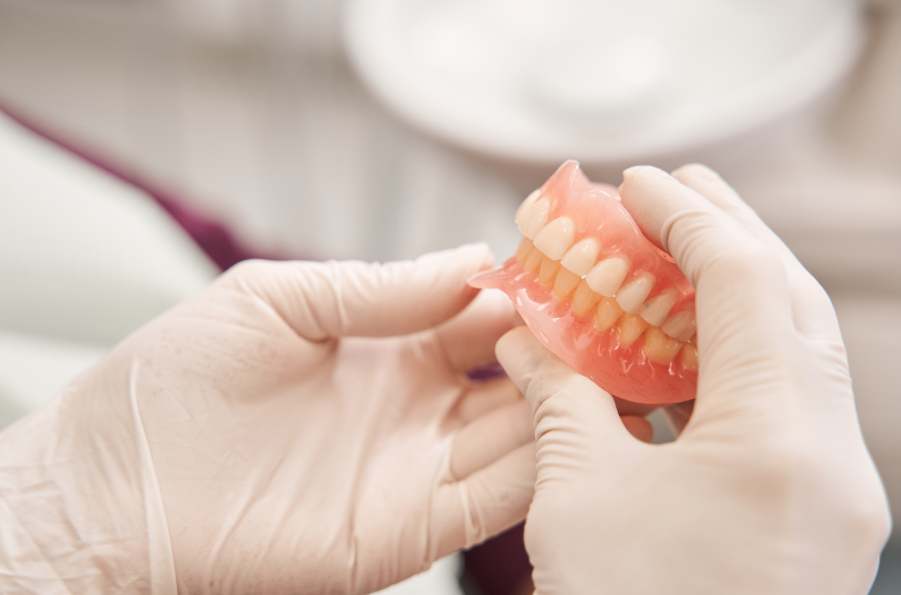
Dentures can restore your smile and help you speak clearly, but many wearers notice changes in the way they eat. If certain foods feel difficult to chew or uncomfortable to manage, you may start avoiding them without even realizing it. Over time, these adjustments can affect your nutrition and overall health.
Understanding the connection between dentures and diet can help you make informed choices — and explore solutions that support both comfort and wellness.
How Dentures Can Change Eating Habits
Traditional dentures rest on the gums and rely on suction or adhesives to stay in place. While they can restore basic function, they may not provide the same biting force or stability as natural teeth.
As a result, many denture wearers begin to avoid foods that are harder to chew, such as raw vegetables, nuts, lean meats, and certain fruits. These foods are often rich in essential nutrients like fiber, protein, and vitamins. Replacing them with softer, processed options may feel easier, but it can lead to a less balanced diet.
Even small dietary shifts over time can impact energy levels, digestion, and overall health.
Nutritional Risks Linked to Denture Use
When chewing becomes challenging, people may unknowingly reduce their intake of nutrient-dense foods. This can result in lower consumption of:
- Fiber, which supports digestive health
- Protein, which helps maintain muscle mass
- Vitamins and minerals essential for immune function and bone health
Research suggests that individuals who wear dentures may face a higher risk of nutritional deficiencies if dietary adjustments aren’t carefully managed. Difficulty chewing can also reduce meal enjoyment, leading to smaller portions or skipped meals.
Maintaining proper nutrition is especially important for older adults, who may already be at risk for nutrient deficiencies.
How Implant-Retained Dentures Can Help
Implant-retained dentures offer a more stable alternative to traditional dentures. Instead of resting solely on the gums, they are anchored to dental implants placed in the jawbone. This added support significantly improves stability and biting strength.
With implant-retained dentures, many patients find they can comfortably eat a wider variety of foods, including crisp vegetables, fresh fruits, and lean proteins. Improved chewing efficiency allows for better digestion and nutrient absorption.
Beyond nutrition, implant-retained dentures can enhance comfort, reduce gum irritation, and provide a more secure fit, helping wearers feel more confident during meals and social gatherings.
Tips for Maintaining Good Nutrition with Dentures
Whether you wear traditional dentures or implant-supported options, there are steps you can take to support a healthy diet:
- Cut foods into smaller pieces to make chewing easier
- Choose nutrient-dense soft foods like yogurt, eggs, fish, and cooked vegetables
- Stay hydrated to support saliva production and digestion
- Schedule regular dental visits to ensure dentures fit properly
If you find yourself avoiding many foods or struggling to maintain a balanced diet, it may be worth discussing alternative solutions with your dental provider.
Your smile should support your health — not limit it.
About the Practice
Devonshire Dental of Boston provides comprehensive restorative solutions, including implant-retained dentures, to help patients regain comfort, function, and confidence. Our doctors focus on personalized treatment planning and advanced techniques to improve stability, chewing ability, and overall quality of life. With a patient-centered approach and a commitment to long-term wellness, the team helps individuals achieve healthier smiles and better daily nutrition.
Call us at (617) 350-7474 or request an appointment online.